Carbon Conscious Consulting (CCC)

Call us Today
+27 67 833 8132
Demystifying ESG Reporting: A Comprehensive Guide
- Dr Leeth Singh
- 2024/08/06
- ESG Solutions

In today’s world, where sustainability and responsible business practices are becoming increasingly vital, Environmental, Social, and Governance (ESG) reporting has emerged as a crucial tool for companies to communicate their commitment to sustainability and ethical conduct. ESG reporting provides stakeholders, including investors, customers, employees, and regulators, valuable information about a company’s environmental, social, and governance performance. This comprehensive guide will take you on a journey through the history of ESG reporting, its precursors, and why it plays such a pivotal role in modern business practices.
A Glimpse into the Past:
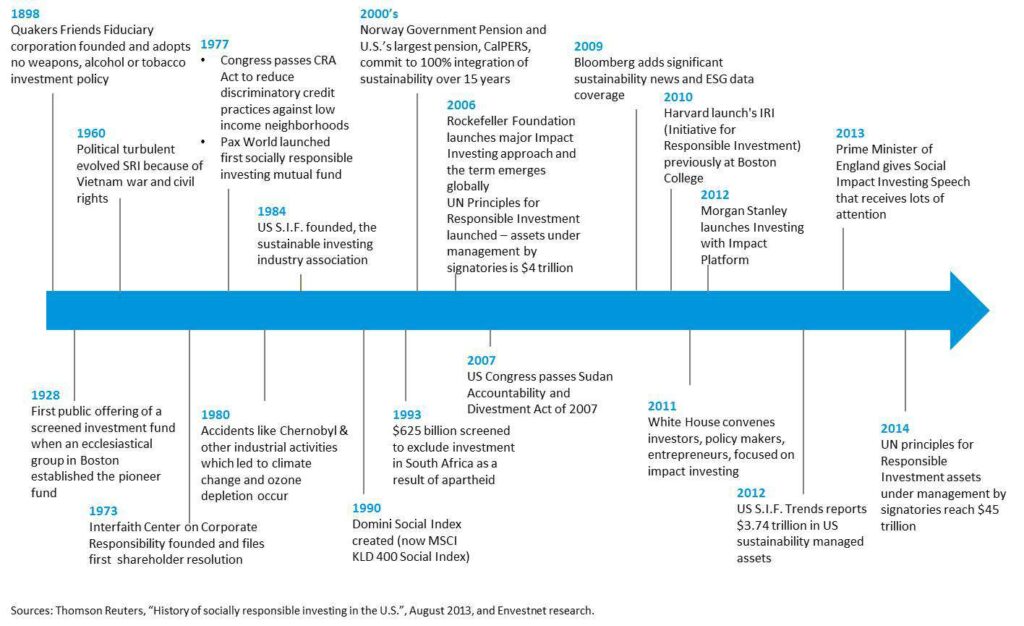
ESG reporting didn’t appear out of thin air. It evolved from various precursors, each reflecting society’s growing concern for the environment, social issues, and corporate governance [1].
- Corporate Social Responsibility (CSR):
- In the mid-20th century, companies began acknowledging their societal responsibilities.
- CSR laid the foundation for ESG reporting by emphasising businesses’ roles in addressing environmental and social issues.
- Socially Responsible Investing (SRI):
- In the 1960s, SRI gained traction as investors avoided companies involved in controversial activities.
- SRI investors sought financial returns while aligning their investments with their values.
- Triple Bottom Line (TBL):
- Coined by John Elkington in 1994, TBL encouraged businesses to consider three aspects: People, Planet, and Profit.
- It introduced the concept of measuring success beyond financial metrics.
- United Nations Global Compact (UNGC):
- Launched in 2000, UNGC encouraged companies to adopt sustainable and socially responsible policies.
- It laid the groundwork for international ESG standards.
Birth of ESG Reporting:
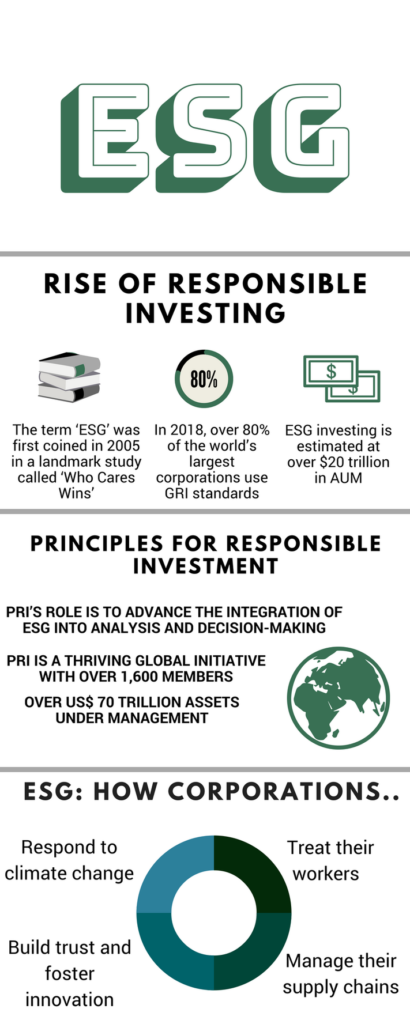
ESG reporting as we know it today began to take shape in the early 2000s. The term “ESG” was coined to describe these reporting practices, reflecting a more comprehensive approach to evaluating a company’s non-financial performance. The term gained momentum thanks to several key developments [2]:
- Institutional Investor Interest:
- Institutional investors started integrating ESG factors into their decision-making processes.
- They recognised that ESG issues could impact a company’s long-term financial performance.
- Financial Crises and Scandals:
- High-profile corporate scandals like Enron and WorldCom underscored the importance of corporate governance.
- These incidents led to greater scrutiny of governance practices and the need for transparency.
- Standardisation Efforts:
- Organisations like the Global Reporting Initiative (GRI) and the Sustainability Accounting Standards Board (SASB) emerged to provide guidelines for ESG reporting.
- These standards aimed to bring consistency and comparability to ESG disclosures.
The Evolution of ESG Reporting:
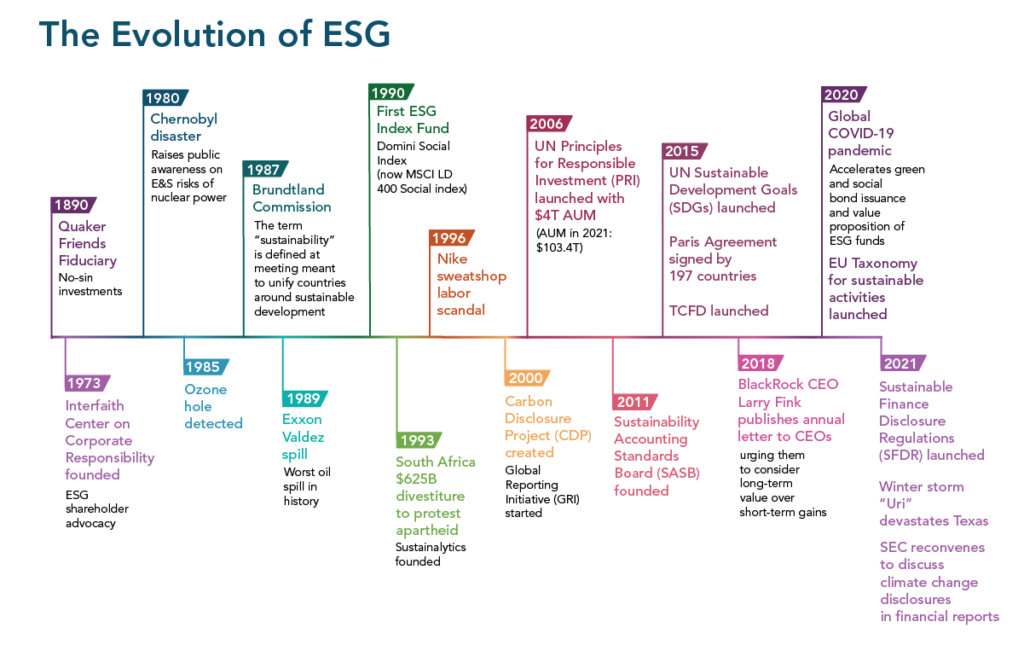
ESG reporting has come a long way since its inception [3]. Here’s a look at its evolution and the key milestones along the way:
- Global Reporting Initiative (GRI):
- Established in 1997, GRI pioneered sustainability reporting guidelines.
- GRI’s framework helps companies report on ESG issues in a structured and consistent manner.
- Sustainability Accounting Standards Board (SASB):
- Founded in 2011, SASB focuses on industry-specific ESG standards.
- It helps investors compare companies within the same industry.
- Task Force on Climate-related Financial Disclosures (TCFD):
- Launched in 2015 by the Financial Stability Board, TCFD promotes climate-related disclosures.
- It encourages companies to assess and disclose the financial impact of climate risks.
- United Nations Sustainable Development Goals (SDGs):
- Adopted in 2015, the SDGs provide a universal framework for sustainability.
- Companies align their ESG efforts with specific SDGs to contribute to global progress.
Why ESG Reporting Matters Today:
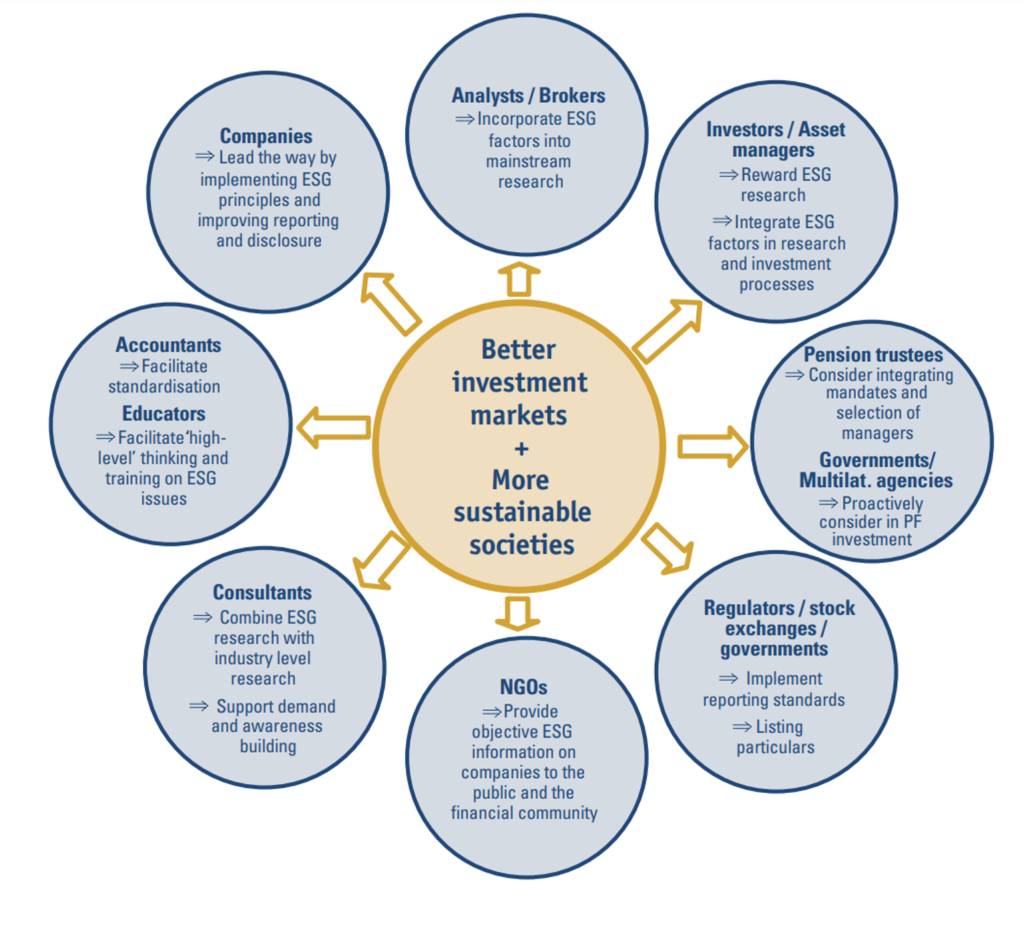
ESG reporting has become integral for several compelling reasons [4]. Here are key reasons why it matters today:
- Risk Mitigation:
- ESG reporting helps companies identify and address environmental, social, and governance risks.
- This proactive approach minimises the likelihood of reputational damage and financial losses.
- Stakeholder Expectations:
- Investors, customers, employees, and regulators increasingly expect companies to be transparent about their ESG performance.
- Failure to meet these expectations can result in negative consequences.
- Access to Capital:
- ESG-focused investors are on the rise and often prefer companies with firm ESG profiles.
- ESG reporting can attract capital and lower borrowing costs for companies.
- Competitive Advantage:
- Companies that excel in ESG reporting can gain a competitive edge.
- Sustainability initiatives can lead to product innovation, cost savings, and enhanced brand reputation.
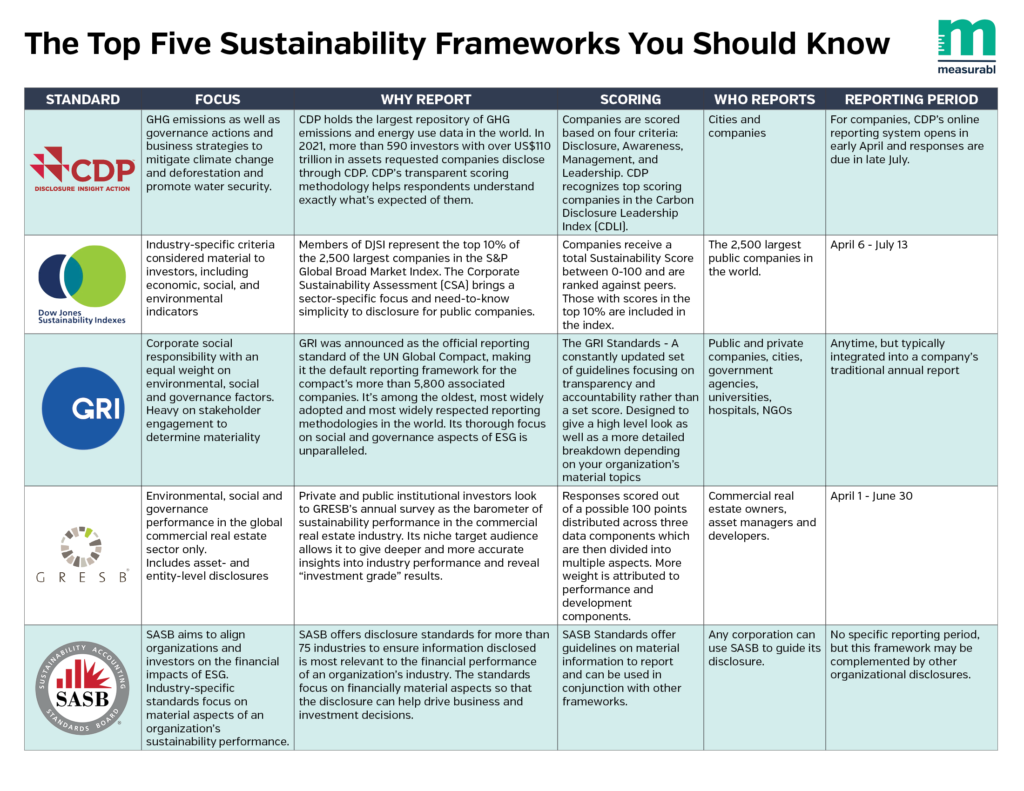
ESG Reporting Frameworks and Standards:
To ensure consistency and comparability, various frameworks and standards have been developed to guide ESG reporting [5]:
- Global Reporting Initiative (GRI):
- The GRI Standards are widely adopted and provide a comprehensive framework for ESG reporting.
- They cover various topics, from greenhouse gas emissions to labour practices.
- Sustainability Accounting Standards Board (SASB):
- SASB’s industry-specific standards help companies disclose material ESG information.
- These standards assist investors in assessing a company’s risk and opportunity profile.
- Task Force on Climate-related Financial Disclosures (TCFD):
- TCFD’s recommendations focus on climate-related disclosures.
- They encourage companies to assess and disclose the impact of climate risks on their business.
- United Nations Global Compact (UNGC):
- UNGC’s Ten Principles provide a broad framework for ESG reporting.
- Companies pledge to uphold human rights, labour, environment, and anti-corruption principles.
The Future of ESG Reporting:
ESG reporting is here to stay, and its significance will likely continue to grow in the coming years. Here are some key trends shaping the future of ESG reporting [6]:
- Regulatory Frameworks:
- Governments are increasingly mandating ESG disclosures for listed companies.
- These regulations will drive greater standardisation and transparency.
- Technology and Data Analytics:
- Advanced technology, including artificial intelligence and big data analytics, will enhance ESG data collection and analysis.
- This will enable more accurate reporting and predictive insights.
- Impact Measurement:
- Companies will focus on measuring and communicating their positive impact on ESG issues.
- Impact reporting will become an integral part of ESG disclosures.
- Integration with Financial Reporting:
- Companies will aim to integrate ESG reporting seamlessly with financial reporting.
- This will provide a holistic view of a company’s performance.
- Stakeholder Engagement:
- Engaging with stakeholders will be a crucial element of ESG reporting.
- Companies will seek feedback to improve their ESG strategies and disclosures.

In Conclusion
ESG reporting has come a long way from its humble beginnings in response to growing societal concerns. It has become a powerful tool for businesses to demonstrate their commitment to sustainability, transparency, and responsible governance. As ESG reporting continues gaining momentum, companies must embrace it to meet stakeholder expectations and thrive in an increasingly sustainable and accountable business landscape. By doing so, companies can secure a place in a future where ESG considerations are central to corporate success.
This guide provides a comprehensive overview of ESG reporting, its history, evolution, significance, and future trends. It equips readers with the knowledge needed to navigate the complex world of sustainability reporting. ESG reporting isn’t just a trend; it’s a fundamental shift in how businesses operate and communicate their values to the world.
References
[1] B. Townsend, “From SRI to ESG: The Origins of Socially Responsible and Sustainable Investing,” The Journal of Impact and ESG Investing, vol. 1, no. 1, pp. 10–25, Sep. 2020, Doi: 10.3905/JESG.2020.1.1.010.
[2] “Demystifying ESG: Its History & Current Status.” https://www.forbes.com/sites/betsyatkins/2020/06/08/demystifying-esgits-history–current-status/?sh=ab8ad7d2cdd3 (accessed Sep. 06, 2023).
[3] S. B. W. S. I. and E. Reporting and undefined 2020, “Evolution of ESG reporting frameworks,” Springer, pp. 13–33, Oct. 2020, Doi: 10.1007/978-3-030-55613-6_2.
[4] S. Arvidsson, J. D.-B. S. and the Environment, and undefined 2022, “Corporate ESG reporting quantity, quality and performance: Where to now for environmental policy and practice?,” Wiley Online Library, vol. 31, no. 3, pp. 1091–1110, Mar. 2021, Doi: 10.1002/bse.2937.
[5] A. Sulkowski, R. J.-A. B. L. Journal, and undefined 2022, “Evolving ESG Reporting Governance, Regime Theory, and Proactive Law: Predictions and Strategies,” Wiley Online Library, Accessed: Sep. 06, 2023. [Online]. Available: https://onlinelibrary.wiley.com/doi/abs/10.1111/ablj.12210
[6] S. Arvidsson, J. D.-B. S. and the Environment, and undefined 2022, “Corporate ESG reporting quantity, quality and performance: Where to now for environmental policy and practice?,” Wiley Online Library, vol. 31, no. 3, pp. 1091–1110, Mar. 2021, Doi: 10.1002/bse.2937.
Dr. Leeth Singh is a multifaceted leader in the fields of environmental science, sustainability, and project management, with a rich background in Geographic Information Systems (GIS) and remote sensing. Grounded in a PhD in environmental science, Leeth’s career trajectory has been marked by a relentless pursuit of knowledge and a steadfast commitment to effecting positive change on a global scale.
OR CALL US NOW